
What Shofo users actually want
Mimir analyzed 1 public source — app reviews, Reddit threads, forum posts — and surfaced 3 patterns with 6 actionable recommendations.
This is a preview. Mimir does this with your customer interviews, support tickets, and analytics in under 60 seconds.
Top recommendation
AI-generated, ranked by impact and evidence strength
Create platform-specific starter templates that showcase cross-platform comparison use cases
High impact · Small effort
Rationale
The API's four-platform coverage is a competitive differentiator, but new users likely approach with single-platform needs and don't immediately recognize the cross-platform value. Creating ready-to-use templates for common cross-platform analyses (trend comparison across TikTok/Instagram, competitor monitoring across all platforms, content performance benchmarking) would immediately demonstrate the product's unique strength.
This addresses the strategic priority of reaching more users by reducing time-to-value. A user who comes for TikTok data but sees an instant cross-platform analysis template is more likely to expand usage and become a higher-value customer. The templates should include sample queries, visualization code, and business context so users can adapt them within minutes rather than spending hours learning the schema across all four platforms.
This recommendation leverages the existing multi-platform infrastructure without requiring new data sources, making it a high-impact, relatively low-effort initiative that directly supports both user growth and retention.
Projected impact
Implementation spec
The full product behind this analysis
Mimir doesn't just analyze — it's a complete product management workflow from feedback to shipped feature.
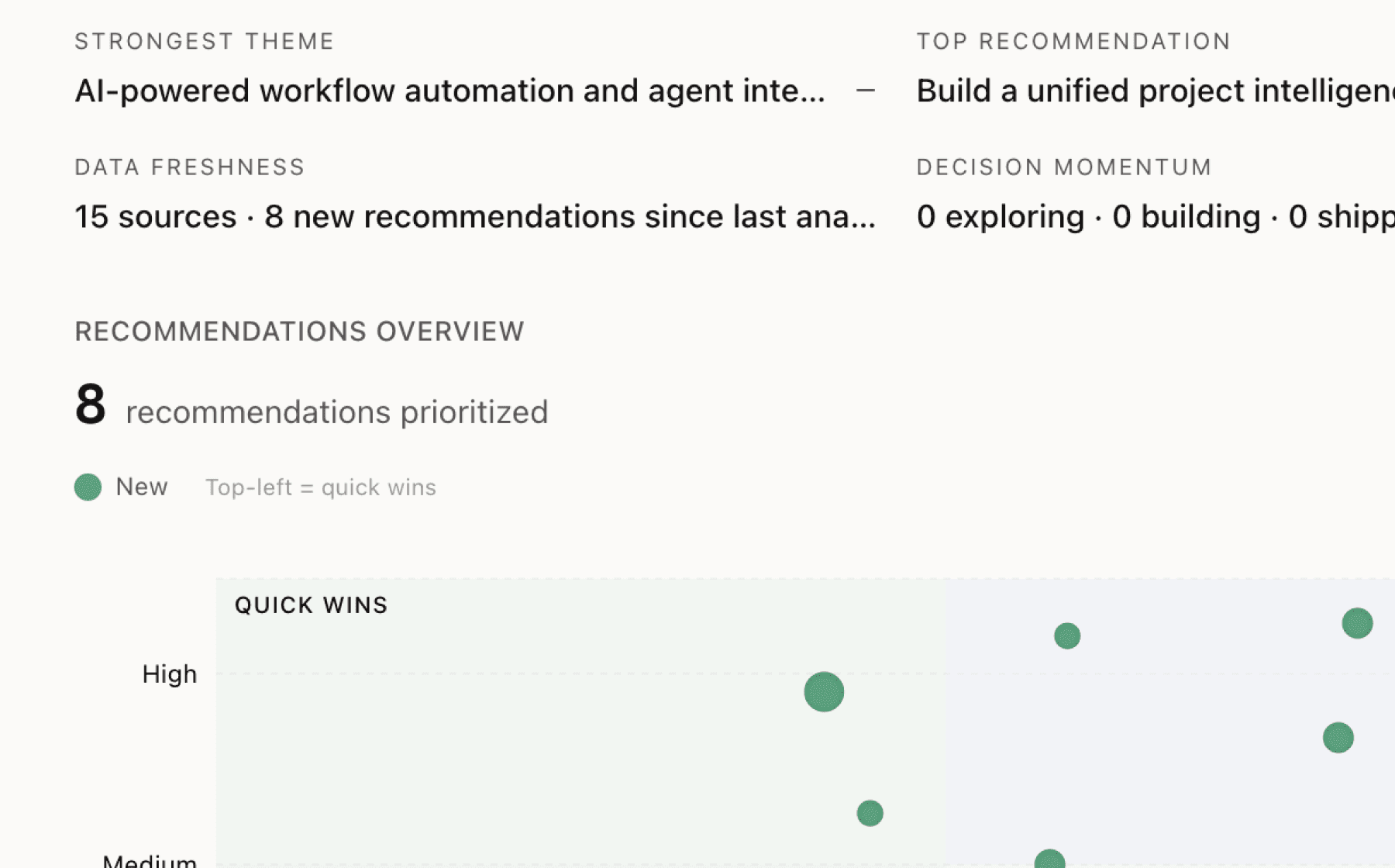
Evidence-backed insights
Every insight traces back to real customer signals. No hunches, no guesses.
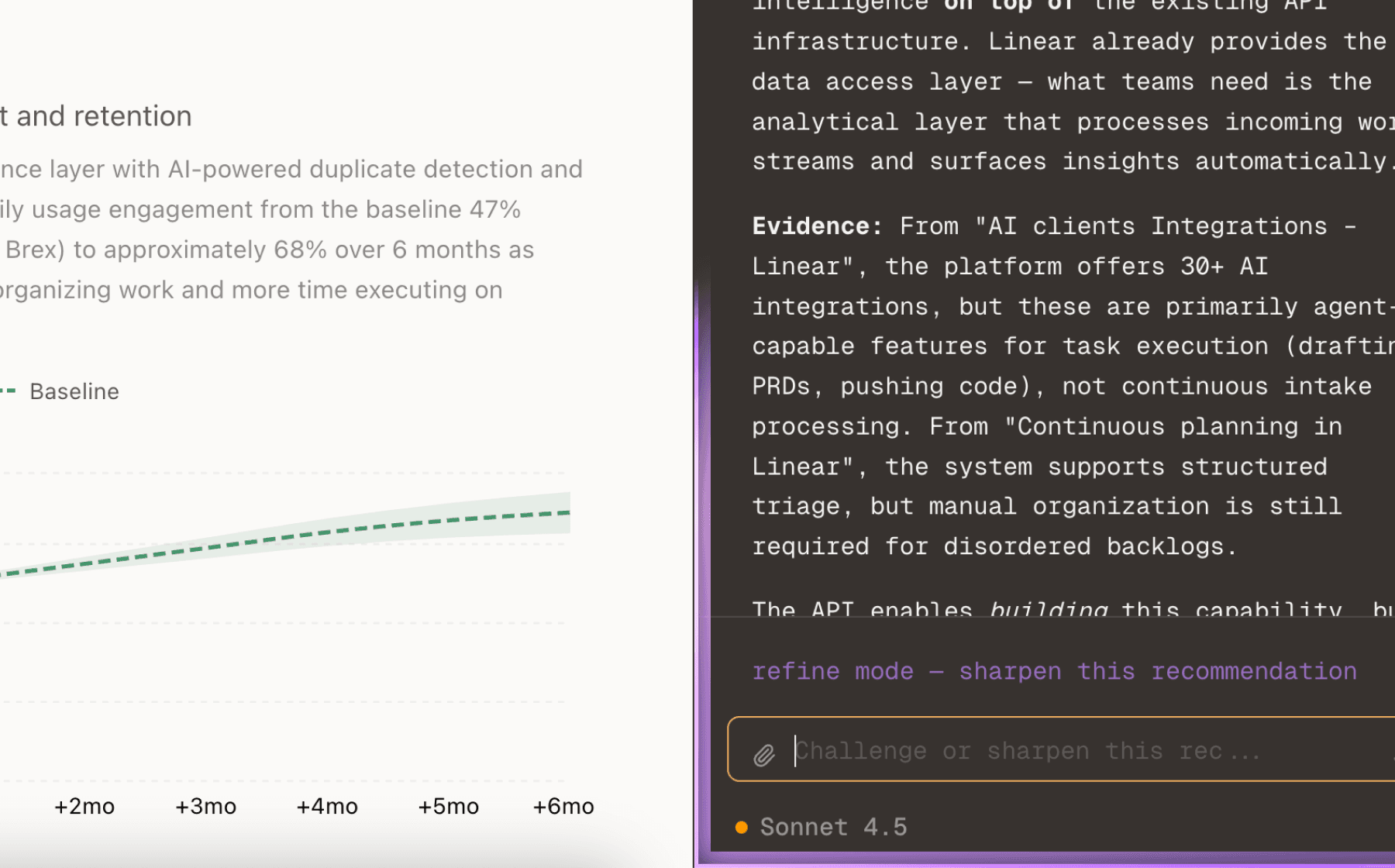
Chat with your data
Ask follow-up questions, refine recommendations, and capture business context through natural conversation.
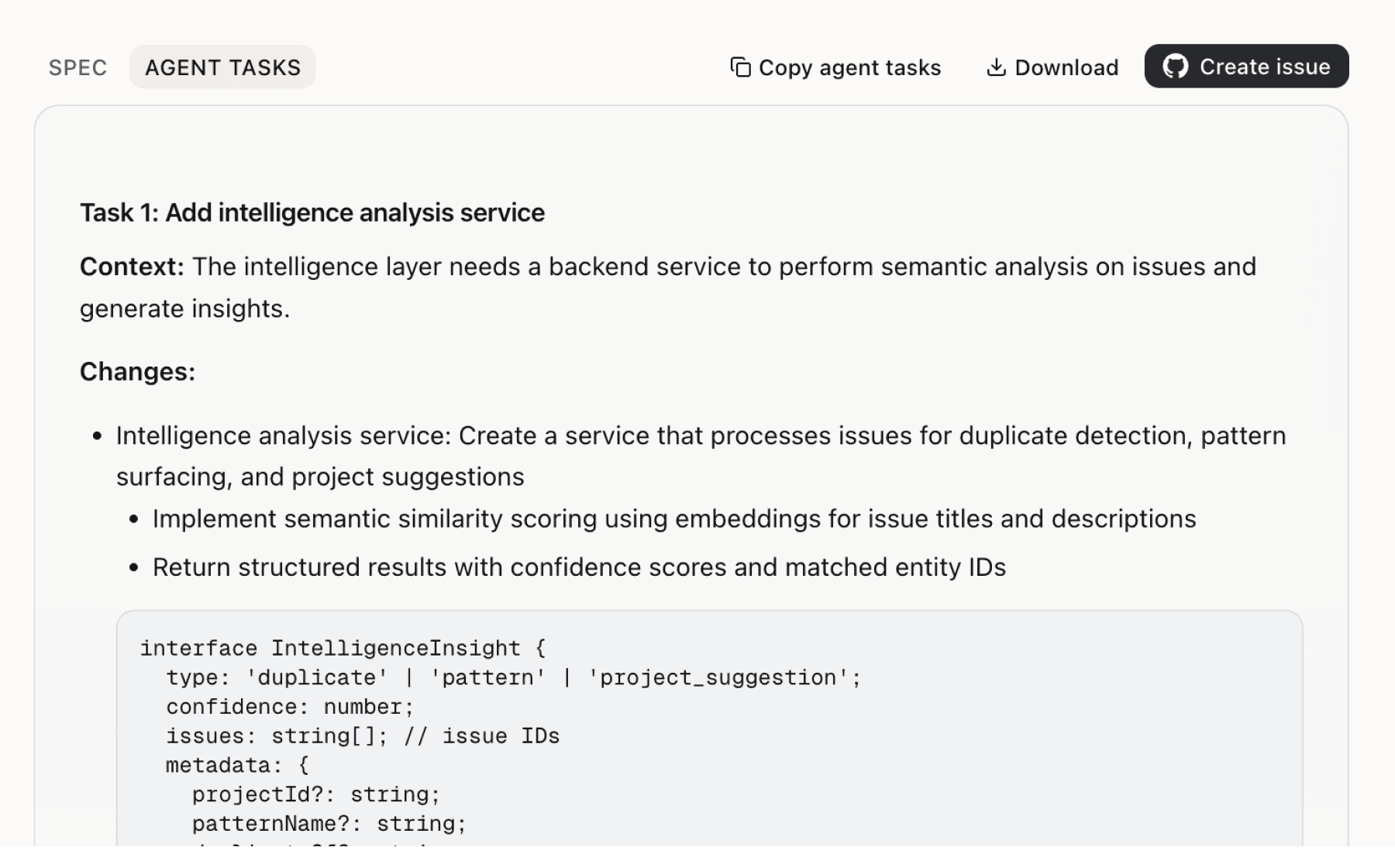
Specs your agents can ship
Go from insight to implementation spec to code-ready tasks in one click.
This analysis used public data only. Imagine what Mimir finds with your customer interviews and product analytics.
Try with your dataMore recommendations
5 additional recommendations generated from the same analysis
The pay-per-record model with optional enrichments creates predictable costs, but potential users cannot evaluate affordability without understanding their likely usage patterns. An interactive calculator on the landing page that lets users input their needs (platform, query frequency, whether they need transcripts/comments) and see real-time cost estimates would remove a major conversion barrier.
The business context indicates the company serves AI labs with custom datasets like "50k cooking videos featuring hand-object interactions," but this human-in-the-loop pipeline capability isn't visible in the API product. Creating pre-built, ready-to-download datasets for common training scenarios (action recognition, scene understanding, audio-visual learning) would attract a new user segment while showcasing the labeling pipeline's value.
The API offers rich metadata and optional enrichments, but users unfamiliar with SQL query optimization or the specific schema structure may over-fetch data and incur unnecessary costs. Platform-specific guides showing how to write efficient queries (using selective field retrieval, appropriate filtering, avoiding redundant enrichments) would improve user satisfaction and reduce cost-driven churn.
The API serves technical users who can write SQL queries, but many potential customers (marketers, agencies, brand managers) need social media insights without the technical overhead. A dashboard product that provides pre-built visualizations, trend detection, and alerts would expand the addressable market while demonstrating the API's capabilities to technical buyers.
The flat $0.0005/record pricing is simple and transparent, but it doesn't provide incentives for users to expand usage or reward loyal high-volume customers. Implementing tiered volume discounts (e.g., 10% off after 1M records/month, 20% off after 10M) would increase revenue from existing customers while maintaining the low-friction entry point for new users.
Insights
Themes and patterns synthesized from customer feedback
The API uses a simple pay-per-record model ($0.0005/record) with optional add-ons at the same rate and no subscriptions or hidden fees. This pricing structure lowers barriers to entry for new users and demonstrates cost efficiency (e.g., 1,000 records with enrichments at $1.50), which may improve conversion and reduce churn from users hesitant about commitment.
“Pay-as-you-go pricing model with no subscriptions or hidden fees; base cost $0.0005/record with optional add-ons for transcripts and comments at $0.0005 each”
The API provides SQL queryability across 100M+ videos spanning four major platforms (TikTok, Instagram, X/Twitter, LinkedIn) with real-time access to all fields. This multi-platform approach positions the product as a unified data solution rather than a single-platform alternative, reducing friction for users who need cross-platform insights.
“API supports SQL queries across 100M+ videos with real-time access to all fields across TikTok, Instagram, X/Twitter, and LinkedIn”
The API includes comprehensive base fields (post metadata, engagement metrics, author info, hashtags, captions, timestamps, music/audio) plus optional add-ons for transcripts and comments. This modular approach allows users to pay only for the data they need, reducing friction for cost-sensitive buyers while supporting advanced use cases like the AI training datasets mentioned in the business context.
“Base data includes post metadata, engagement metrics (likes, views, shares), author information, hashtags, captions, timestamps, and music/audio information”
Run this analysis on your own data
Upload feedback, interviews, or metrics. Get results like these in under 60 seconds.