What Praxos users actually want
Mimir analyzed 11 public sources — app reviews, Reddit threads, forum posts — and surfaced 18 patterns with 7 actionable recommendations.
This is a preview. Mimir does this with your customer interviews, support tickets, and analytics in under 60 seconds.
Top recommendation
AI-generated, ranked by impact and evidence strength
Build transparent data activity dashboard showing what data flows to third parties
High impact · Large effort
Rationale
Users have deletion rights and regional residency options, yet the platform collects extensive behavioral data and shares it with marketing partners while ignoring Do Not Track signals. This creates a trust gap between stated control and actual practices. Twenty-one sources highlight this tension.
The privacy policy explicitly excludes third-party integrations from coverage, meaning users have no visibility into what happens to their data once it leaves the platform. For a personal AI assistant handling sensitive business communications and financial data, this opacity directly threatens the retention metric.
A real-time dashboard showing what data was collected, when it was shared, and with whom would resolve this contradiction. Users could see marketing partner data flows, audit third-party integration access, and take immediate action. This transparency would differentiate the product in a crowded market and address the highest-severity theme affecting the most sources.
Projected impact
The full product behind this analysis
Mimir doesn't just analyze — it's a complete product management workflow from feedback to shipped feature.
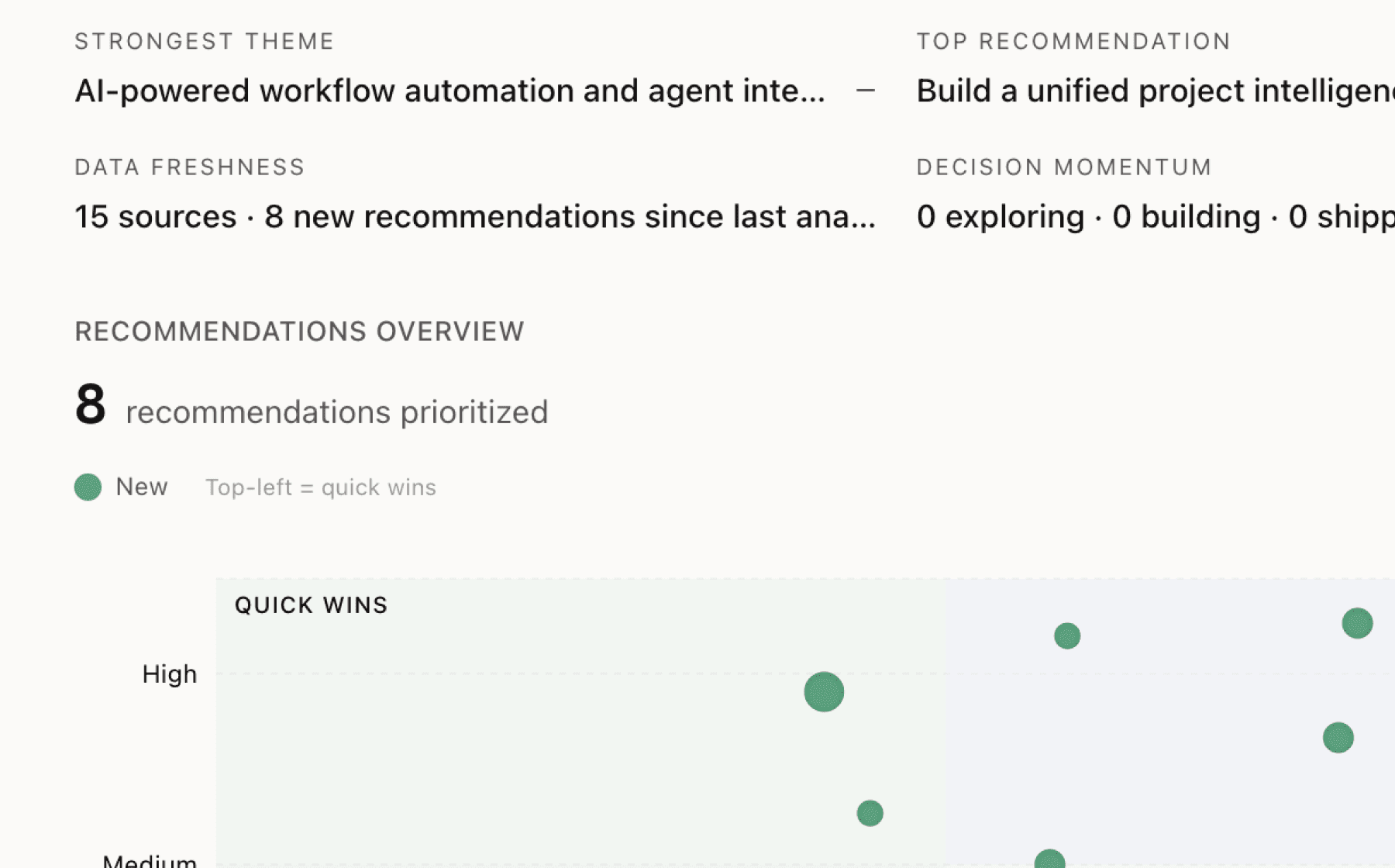
Evidence-backed insights
Every insight traces back to real customer signals. No hunches, no guesses.
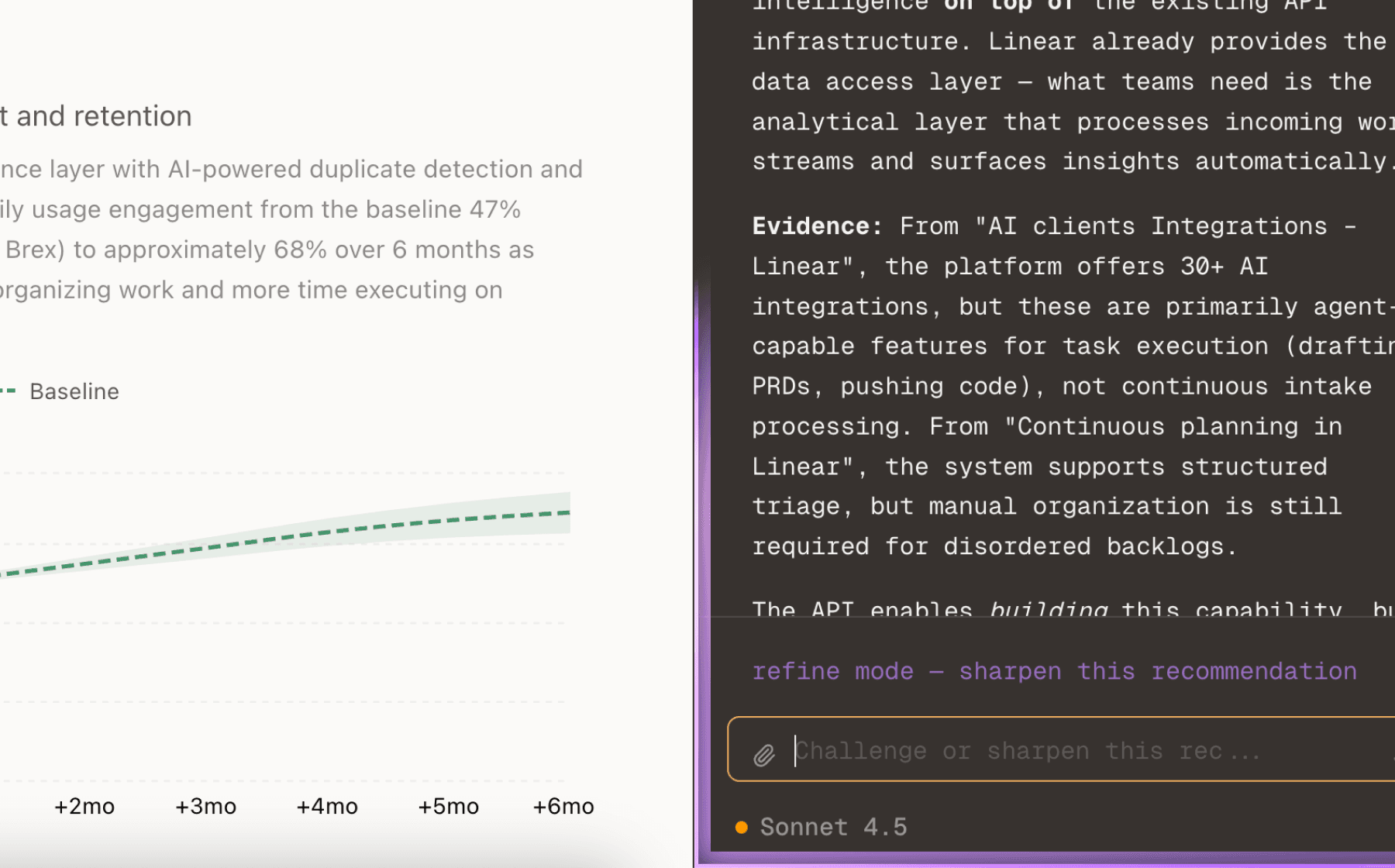
Chat with your data
Ask follow-up questions, refine recommendations, and capture business context through natural conversation.
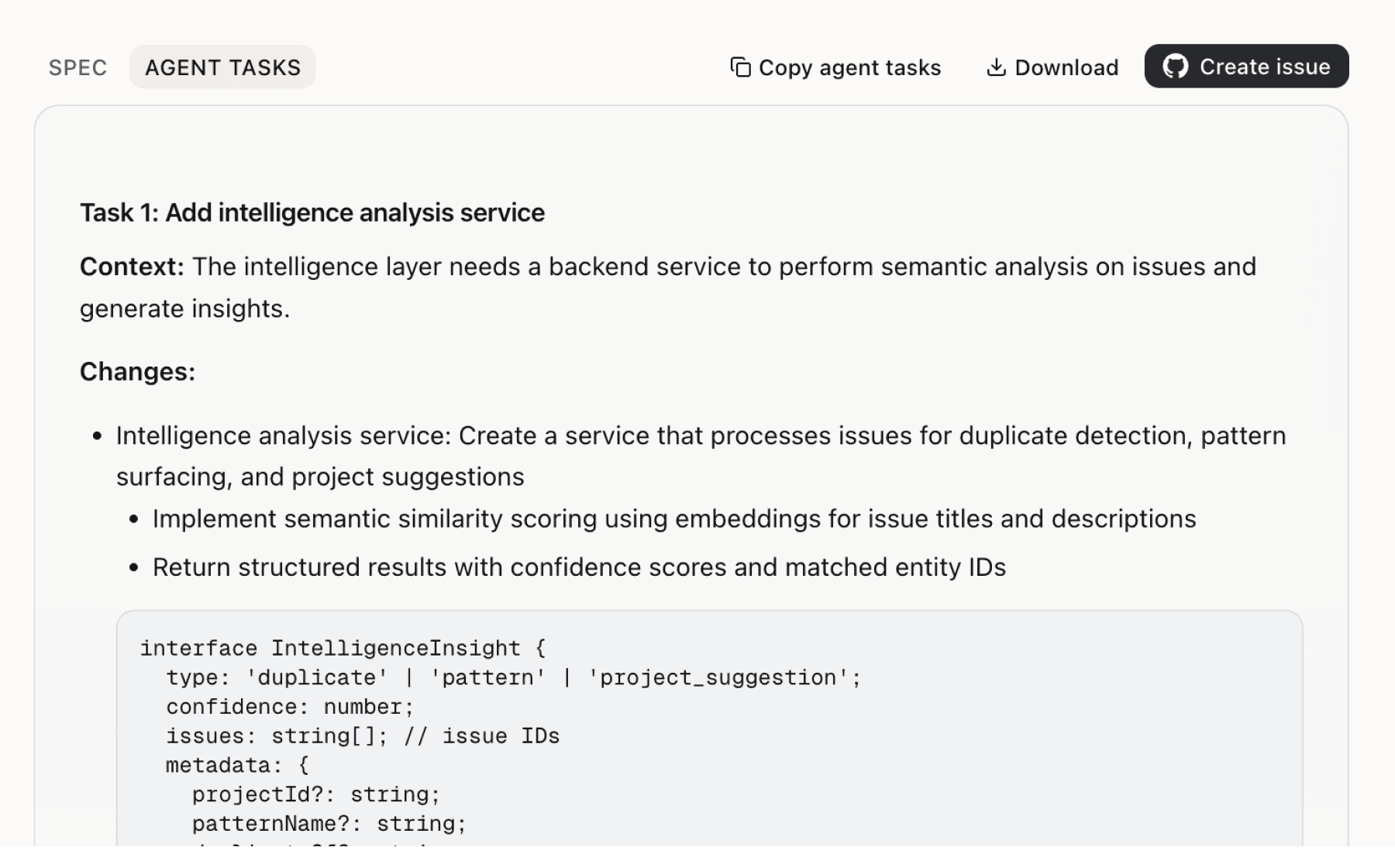
Specs your agents can ship
Go from insight to implementation spec to code-ready tasks in one click.
This analysis used public data only. Imagine what Mimir finds with your customer interviews and product analytics.
Try with your dataMore recommendations
6 additional recommendations generated from the same analysis
Personal tier users can only connect Gmail, Outlook, and .edu addresses, blocking business owners like Sally and Lei from using the product effectively without paying $50/month. Four sources identify this as a retention barrier for the exact personas demonstrating strongest product-market fit.
Sally manages nine employees across two bakeries and needs to ensure delivery notifications reach the right people automatically. Four sources show business owners struggle with task delegation and monitoring across multiple locations. This is a natural expansion of the core engagement loop.
The platform does not verify user identities and explicitly disclaims liability for impersonation or fraud. Three sources document this gap. For a personal assistant accessing emails, financial data, and business communications, identity verification is a baseline security expectation.
Personal tier users get support through Discord while Professional tier customers receive dedicated support at $600 annually. Four sources identify this as affecting retention. The gap is too wide for users demonstrating engagement but not yet ready to pay Professional pricing.
The platform explicitly does not honor Do Not Track signals from browsers, affecting twenty-one sources in the highest-severity theme. For privacy-conscious users evaluating a personal AI assistant, this is a dealbreaker that contradicts the stated commitment to user control.
Sixteen sources show strong product-market fit across specific personas with clear use cases: business owners monitoring operations, people with ADHD managing commitments, and seniors handling administrative tasks. Each persona has distinct automation needs that new users must discover and configure.
Insights
Themes and patterns synthesized from customer feedback
Personal tier offers unlimited apps and automations at no cost, while Professional tier ($50/month) adds company email support and dedicated support. This structure maintains engagement on the free tier while creating a clear path to monetization for power users.
“Personal tier offers unlimited connected apps and unlimited commands/automations at no cost”
Praxos does not store payment information directly; instead it integrates only with PCI-compliant third-party payment vendors like Stripe, ensuring sensitive financial data is handled by certified providers and reducing platform liability.
“Payment information not stored by Praxos; only PCI-compliant payment vendors integrated”
The platform does not verify user identities and instead encourages independent verification before engagement, creating potential fraud and impersonation risks. The company reserves the right to suspend accounts for false identity information but offers no proactive verification mechanism.
“Platform is intended only for users 18+ years old; age verification is a requirement for access”
Users retain ownership of generated content but grant Praxos a broad, nonexclusive, worldwide, royalty-free license to use, copy, display, store, and analyze content without additional compensation. This creates a potential tension between user expectations and platform rights.
“Users retain ownership of their generated content but grant Praxos nonexclusive, worldwide, royalty-free license to use, copy, display, and distribute it”
Praxos offers multiple authentication mechanisms including two-factor authentication and single sign-on to help users and organizations control account access. These controls are available across both tier levels.
“Two-factor authentication and SSO available for customers to limit organizational access”
Users have requested the ability to enable secure third-party integrations with encrypted endpoints, addressing a gap between current platform capabilities and integration security needs.
“Customers can configure third-party integrations with requirement for secure, encrypted endpoints”
Company owns all platform content, features, and design elements and prohibits reverse engineering, decompiling, and code tampering to protect proprietary technology.
“All platform content, features, and visual design are owned by Praxos and protected by copyright/IP laws”
Praxos reserves the right to revise Terms of Service and policies at any time with immediate effect, granting the company broad flexibility to modify terms while maintaining enforcement of prohibited uses including impersonation, harassment, and competitive benchmarking.
“Terms of Service were last updated July 28, 2025; company reserves right to revise terms at any time with immediate effect”
Users are responsible for maintaining account confidentiality and managing login credentials. The platform is not liable for unauthorized access if users fail to protect their account information, shifting security responsibility to end users.
“Users must maintain confidentiality of account information; company not liable for unauthorized account use by others”
Praxos requests opt-in permission from customers to use and display their organization logos on the website and promotional materials, with a specific contact point for requests.
“Praxos requests permission to use and display user organizations' logos on website and promotional materials unless otherwise specified”
Data defaults to US but is configurable to EU, Canada, Australia, or other Azure regions per request, supporting compliance with regional data residency and data sovereignty requirements across different markets.
“Data residency defaults to United States but can be configured to EU, Canada, Australia or other Azure regions upon request”
Platform is restricted to users 18+ with age verification requirement for access, establishing legal safeguards for user eligibility.
“Privacy policy last updated September 21, 2025 for Praxos Intelligence AI product”
Users maintain full control over their data with immediate deletion rights and geographic residency options, but the company collects extensive device, usage, and behavioral data (IP, clickstream, email interaction) and shares with marketing partners. Privacy policy excludes third-party integrations and does not honor Do Not Track signals, creating a tension between stated control and actual data practices.
“Data residency options available in multiple Azure regions (US, EU, Canada, Australia) upon request”
Terms of Service establish that users are solely responsible for legal compliance with their usage, while the platform includes arbitration clauses, class-action waivers, and liability limitations. Praxos also clarifies it does not provide professional services and cannot be held liable for user violations or professional conduct issues.
“Praxos explicitly disclaims being an insurance company, broker, or providing insurance/legal advice; no professional relationship is created”
Users need the ability to automate tasks across multiple devices (phone, computer) and delegate work to others, particularly business owners managing multiple locations and employees. This capability gap limits engagement for power users.
“Praxos supports both direct commands and persistent directives for task automation”
Personal tier users receive support through Discord community channels with email restrictions (Gmail, Outlook, .edu only), while Professional tier ($50/month) customers get dedicated support and company domain email access. This differentiation directly impacts engagement and retention across customer segments.
“Personal tier supports only Gmail, Outlook, and .edu email addresses; Professional tier adds support for any email address including company domains”
Users across multiple personas—business owners, people with ADHD, seniors—achieve measurable engagement and retention by automating routine tasks that directly address their pain points: monitoring operations, managing commitments, and handling administrative work. This demonstrates clear product-market fit and is the primary driver of user value.
“Sally manages 9 employees across two bakeries and sometimes misses delivery reviews”
Praxos implements comprehensive security controls including end-to-end encryption (TLS/AES-256), SOC 1-3 and PCI DSS compliance, secure data centers, and multi-factor authentication. Financial data is delegated to PCI-compliant third parties. This technical foundation protects user data in transit and at rest across all operations.
“Continuous vulnerability monitoring and code review processes in place to protect user data”
Run this analysis on your own data
Upload feedback, interviews, or metrics. Get results like these in under 60 seconds.