What Oto users actually want
Mimir analyzed 15 public sources — app reviews, Reddit threads, forum posts — and surfaced 15 patterns with 7 actionable recommendations.
This is a preview. Mimir does this with your customer interviews, support tickets, and analytics in under 60 seconds.
Top recommendation
AI-generated, ranked by impact and evidence strength
Build a personalized comorbidity intake that tailors the program experience based on TMD, hearing loss, hyperacusis, and anxiety profiles
High impact · Large effort
Rationale
Up to 70% of TMD patients have tinnitus, and users frequently present with hearing loss, hyperacusis, PTSD, and anxiety that fundamentally change how they can engage with standard audio sessions. Users with hyperacusis cannot tolerate certain sound therapy approaches, users with TMD need jaw-specific exercises, and users with hearing aids require different masking strategies. The current program delivers generic CBT sessions, but evidence shows personalized treatment that evolves based on individual response substantially outperforms scripted protocols.
A comorbidity-aware intake could modify session content, adjust audio parameters (volume, frequency profiles), recommend specific exercises (jaw relaxation for TMD users), and flag users who need hearing aids or specialist referrals. This addresses the core challenge that tinnitus rarely exists in isolation and creates distinct user cohorts with different needs.
The business impact is direct: users who receive treatment matched to their specific health presentation show better outcomes, leading to higher retention. This recommendation leverages existing assessment infrastructure and clinical partnerships while differentiating Oto from one-size-fits-all competitors.
Projected impact
The full product behind this analysis
Mimir doesn't just analyze — it's a complete product management workflow from feedback to shipped feature.
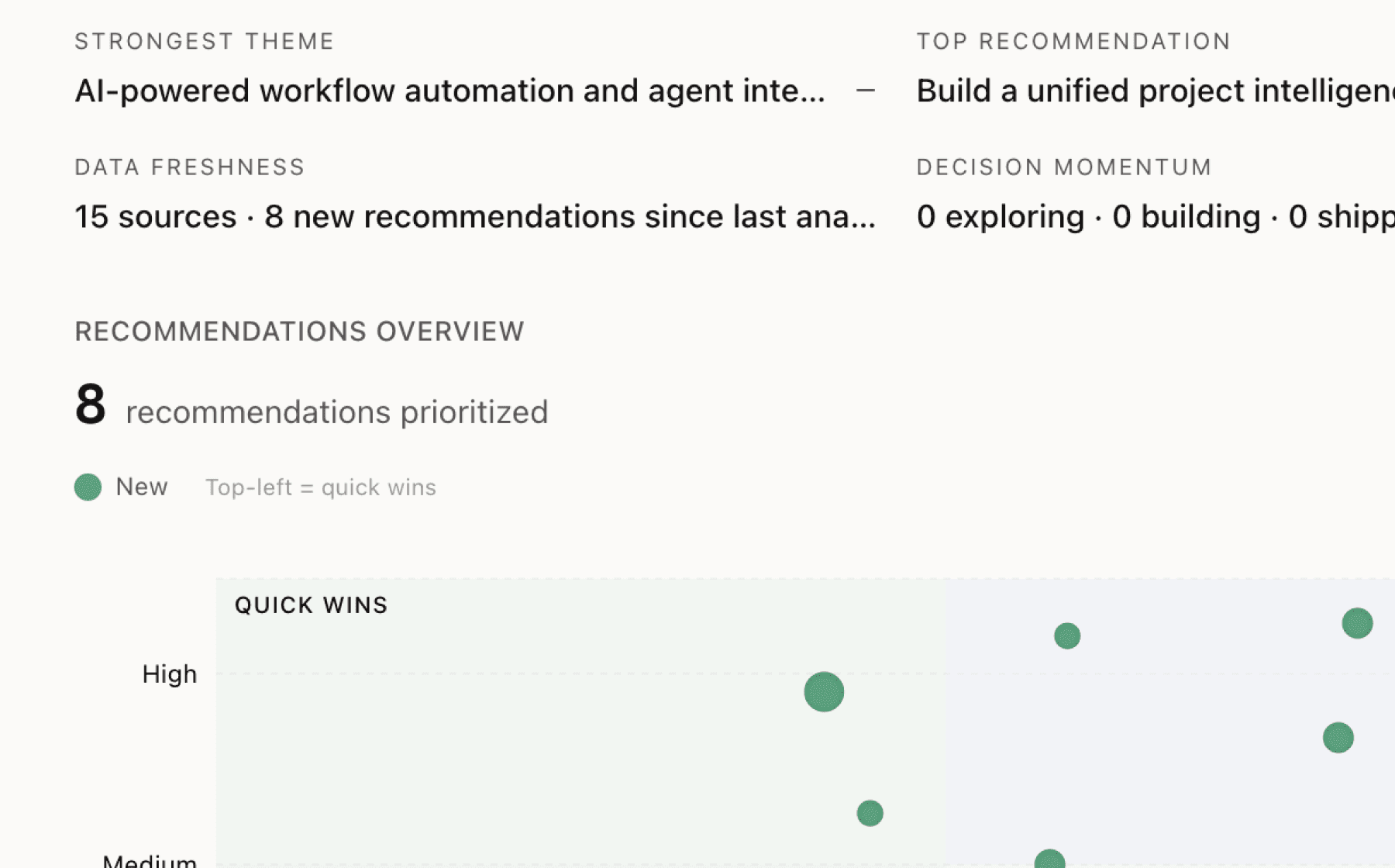
Evidence-backed insights
Every insight traces back to real customer signals. No hunches, no guesses.
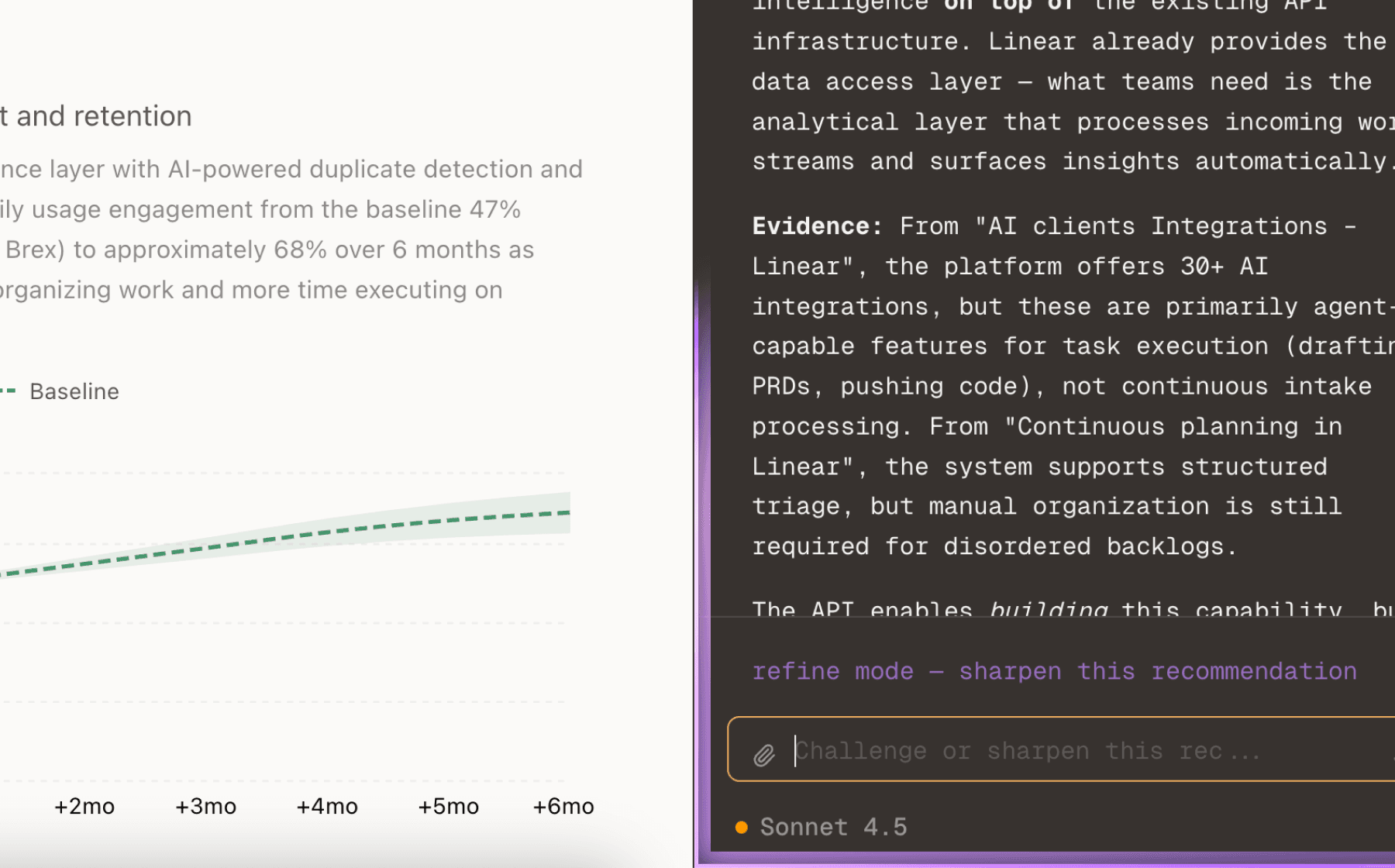
Chat with your data
Ask follow-up questions, refine recommendations, and capture business context through natural conversation.
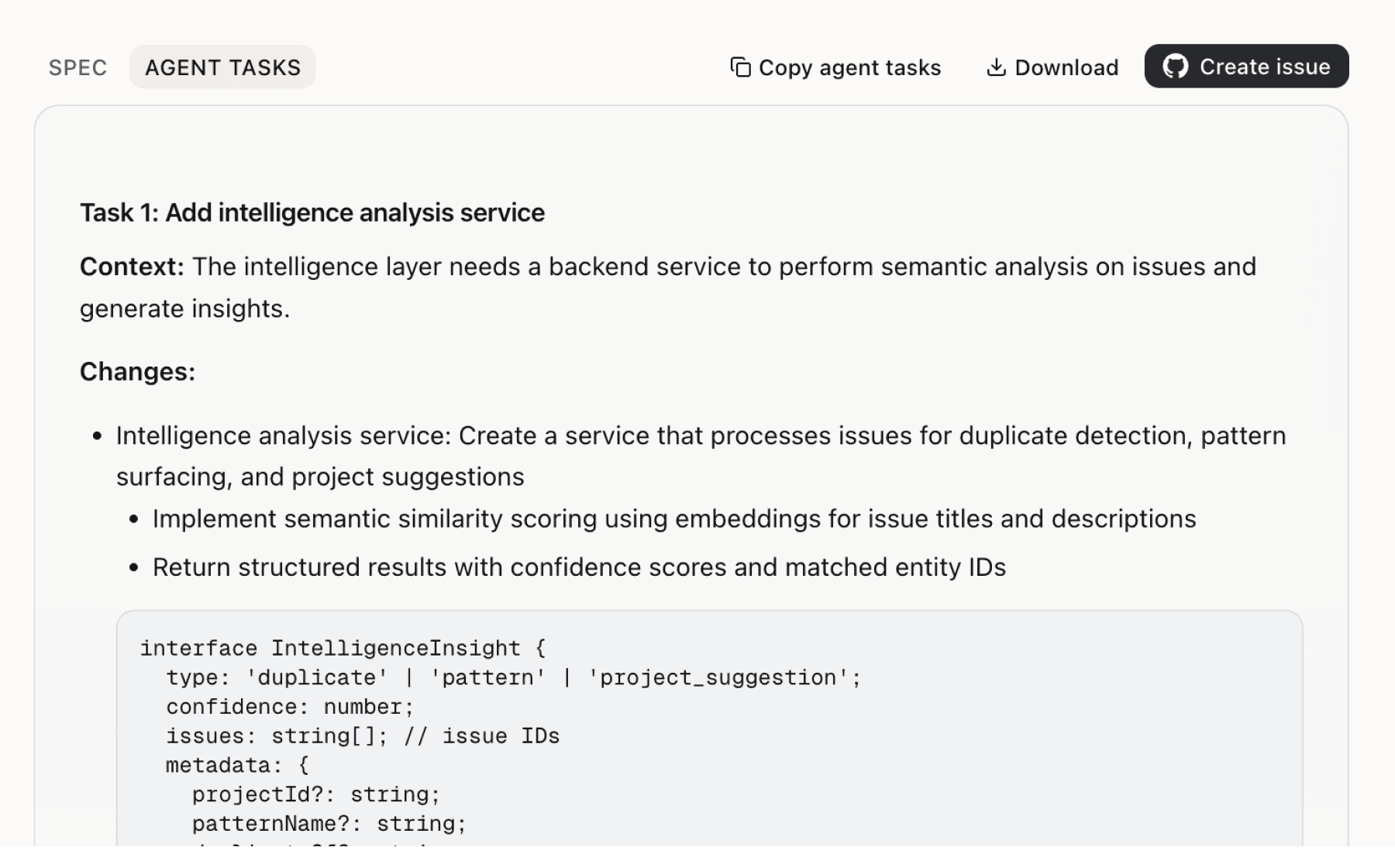
Specs your agents can ship
Go from insight to implementation spec to code-ready tasks in one click.
This analysis used public data only. Imagine what Mimir finds with your customer interviews and product analytics.
Try with your dataMore recommendations
6 additional recommendations generated from the same analysis
Users are unknowingly worsening their tinnitus through well-intentioned behaviors like excessive ear plug use, which causes auditory deprivation, central gain, hyperacusis, and phonophobia. The content library explains these mechanisms, but passive articles do not intercept users before they develop these harmful patterns. An active intervention could screen for maladaptive behaviors during onboarding and throughout treatment, provide personalized guidance on safe sound exposure thresholds, and track behavior change over time.
Users deeply value being treated as individuals rather than following generic protocols, and the one-to-one therapy relationship is critical for managing the psychological dimensions of tinnitus. However, tinnitus presentations vary dramatically based on comorbidities. A user with TMD and jaw crunching needs a therapist familiar with jaw-ear connections and referred pain mechanisms. A menopausal woman with fluctuating symptoms needs someone who understands hormonal cycles and HRT considerations. A veteran with PTSD and sound tolerance issues requires trauma-informed care.
Users report sustained engagement over five months and appreciate realistic expectations about timelines, but the current positioning does not make the long-term journey clear upfront. Tinnitus improvement follows a predictable arc: initial distress reduction through stress management and sleep support, gradual habituation where users notice tinnitus less frequently, and eventual independence where users no longer need active management. Users who understand this trajectory are less likely to churn during natural symptom fluctuations or quiet periods followed by temporary worsening.
The content library includes 40+ articles covering everything from basic tinnitus mechanisms to specialized topics like pulsatile tinnitus, TMD, menopause, and PTSD interactions. This breadth is valuable but potentially overwhelming for new users who need foundational understanding before exploring comorbidities or advanced interventions. Users accessing complex content too early may become anxious or adopt ineffective strategies before understanding core principles.
The platform already collects comprehensive health and usage data including TFI assessments, session completion, journal entries, and audio selections, and shares some of this with healthcare providers when users consent. However, the data appears to exist in separate streams rather than a unified visualization that reveals patterns. Users with fluctuating symptoms report confusion about whether they are improving, and therapists need efficient ways to identify intervention points.
Users report graduating from the program with durable coping skills and maintaining symptom management independently, but some continue using audio content for relief and others experience symptom returns during stress periods. The current model assumes users either remain subscribed at full price or cancel completely, missing an opportunity to serve users in a maintenance phase who want lighter-touch support.
Insights
Themes and patterns synthesized from customer feedback
Oto operates different subscription and payment processing systems for US (Stripe) and UK/EU (RevenueCat) regions, with content gating and regional legal structures. Subscription management and regional variation impact retention and operational scalability.
“Some app content is locked and requires an active Oto subscription for access.”
Oto operates across multiple jurisdictions (UK, EU, US) requiring compliance with GDPR, HIPAA, and local consumer protection laws, with robust security measures (TLS 1.2+, AES-256 encryption, RBAC). Strong data governance with granular user controls over sharing and deletion reinforces trustworthiness.
“Oto complies with UK GDPR, EU GDPR, and HIPAA requirements for US clinic partnerships.”
Oto extensively tracks user engagement through session starts, completions, and app interactions via Firebase Analytics and Sentry, with de-identified data shared with researchers. This analytics infrastructure enables continuous program optimization and validates effectiveness claims.
“Website includes customer support contact pathway and cookie consent management, indicating user data and engagement tracking infrastructure”
The platform leverages coach testimonials, user stories, and peer support to build community connection addressing diverse user needs including young people and women's health concerns. Peer support serves as an additional retention and engagement lever beyond clinical content.
“"It helps you from day one" - Mandy, US”
Gaps exist in telehealth provider coverage across US states, creating friction for users seeking professional support integration. Non-US users rely on app store subscriptions while US users may have insurance-integrated pathways, creating differential access.
“Telehealth providers available to cover all US states for users without local providers”
One-to-one therapy is a critical engagement driver, but users experience friction scheduling sessions due to timezone display inconsistencies (EST vs GMT) causing missed appointments. This usability barrier undermines access to a high-value program component.
“Timezone confusion for scheduling 1-1 therapy sessions; time display inconsistency (EST vs GMT) caused missed appointments”
40+ articles and strategic educational content cover tinnitus causes, physiological mechanisms, comorbidities (TMD, hyperacusis, hearing loss), and specialized triggers, directly addressing common user concerns. The content library serves as both a retention mechanism and a conversion tool that builds trust and user agency in symptom management.
“Content covers diverse tinnitus-related topics including causes, triggers, treatments, and lifestyle management with 40+ published articles.”
Tinnitus users frequently present with TMD, hearing loss, hyperacusis, anxiety, and other conditions that impact ability to engage with standard program formats. The platform addresses this through flexible audio content options, related condition coverage, and tailored intervention strategies that accommodate diverse health presentations.
“Sound therapy and cognitive behavioral therapy (CBT) can help manage phonophobia and hyperacusis by identifying triggers and reframing sound perception.”
The 10-minute daily guided audio sessions are smartphone-accessible and self-paced, with free trials and freemium models reducing barriers to entry. Global distribution through multiple channels (clinician partners and direct-to-consumer) enables location-independent access to science-based treatment.
“Program requires 10 minutes per day of guided audio sessions for tinnitus management”
Well-intentioned interventions like overuse of ear plugs paradoxically worsen tinnitus through auditory deprivation and hyperacusis development. Oto's content educates users on safe sound exposure thresholds and evidence-based alternatives, preventing user-inflicted harm and supporting sustainable symptom management.
“Using ear plugs can worsen tinnitus symptoms by reducing environmental noise, making internal tinnitus sounds more prominent and bothersome.”
Oto's marketing emphasizes randomized controlled trials, published research, and partnerships with leading institutions like University of Cambridge, supported by a Scientific Advisory Board of world-leading tinnitus specialists. This evidence-based positioning directly counters user skepticism about treatment effectiveness and builds institutional trust.
“Oto has been assessed in two randomized controlled trials and a pilot study; one RCT published and DEFINE trial with University of Cambridge is ongoing”
Oto collects comprehensive health and usage data (TFI assessments, session completion, journal entries) that can be shared with healthcare providers when users consent, enabling integrated care delivery. A clinician provider network supports coordinated treatment and extended reach through healthcare partnerships.
“Number of clinicians in Oto provider network”
Oto's evidence-based CBT framework delivers measurable user outcomes with noticeable improvements within weeks, driven by personalized assessment and tailored treatment plans that evolve based on individual response. This personalization significantly outperforms generic protocols and directly addresses the core unmet need of finding effective tinnitus treatment.
“Finding effective help for tinnitus is hard, which prompted the creation of Oto”
One-to-one CBT therapy and supportive clinician interaction are critical differentiators that help users manage tinnitus's psychological dimensions and break the stress-tinnitus cycle. Users experiencing isolation and depression report that caring therapeutic relationships substantially improve emotional wellbeing, trust, and program adherence.
“One-to-one therapy is identified as critical differentiator for helping users understand underlying psychological mechanisms of tinnitus perception”
Users demonstrate sustained engagement over 5+ months with high app store ratings, validating the program's ability to maintain interest and value delivery over time. This retention is reinforced by realistic expectation-setting, audio relief mechanisms, and ongoing educational support that keeps users engaged beyond initial symptom improvement.
“App store rating based on customer reviews”
Run this analysis on your own data
Upload feedback, interviews, or metrics. Get results like these in under 60 seconds.