
What Emdash users actually want
Mimir analyzed 1 public source — app reviews, Reddit threads, forum posts — and surfaced 7 patterns with 6 actionable recommendations.
This is a preview. Mimir does this with your customer interviews, support tickets, and analytics in under 60 seconds.
Top recommendation
AI-generated, ranked by impact and evidence strength
Build native GitHub Actions integration that eliminates gh CLI dependency
High impact · Medium effort
Rationale
GitHub CLI is currently optional and only required for three operations—opening PRs, fetching repo info, and handling GitHub Issues. This creates friction for users who haven't installed gh or prefer staying within GitHub's native ecosystem. A native GitHub Actions workflow or bot integration would let users trigger agents directly from issues, automatically open PRs, and synchronize state without leaving GitHub.
This addresses the open question of increasing GitHub adoption by meeting developers where they already work. The integration spans multiple workflows (issues, PRs, repo info), so consolidating these into a single native GitHub experience removes barriers and positions Emdash as a first-class GitHub tool rather than a CLI utility that happens to work with GitHub.
The change would also leverage the existing multi-provider architecture and isolated worktree model, since the core execution logic is already proven. The focus would be on replacing the gh CLI touchpoints with GitHub API calls or Actions-based triggers, making the product accessible to any developer with a GitHub account.
Projected impact
The full product behind this analysis
Mimir doesn't just analyze — it's a complete product management workflow from feedback to shipped feature.
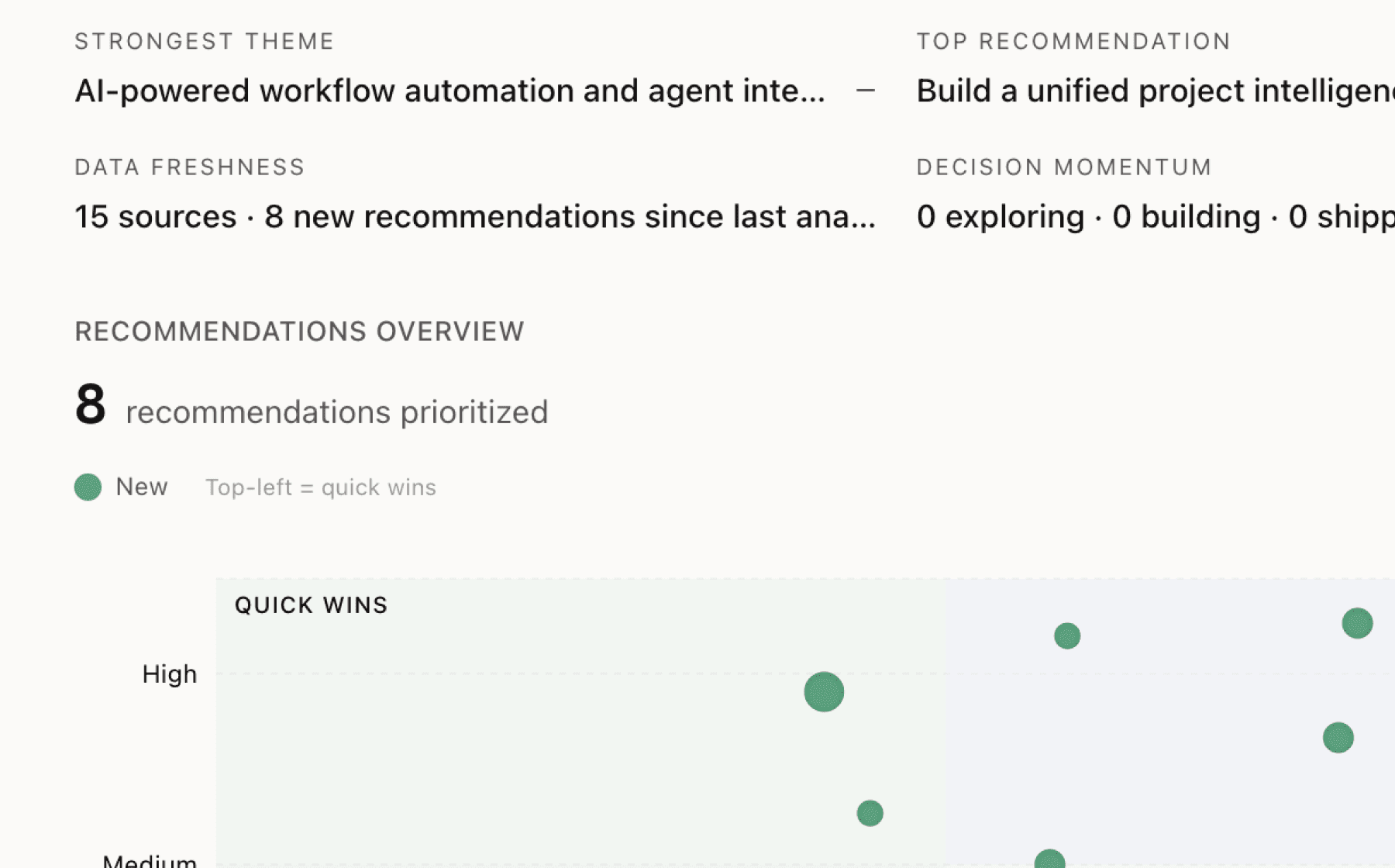
Evidence-backed insights
Every insight traces back to real customer signals. No hunches, no guesses.
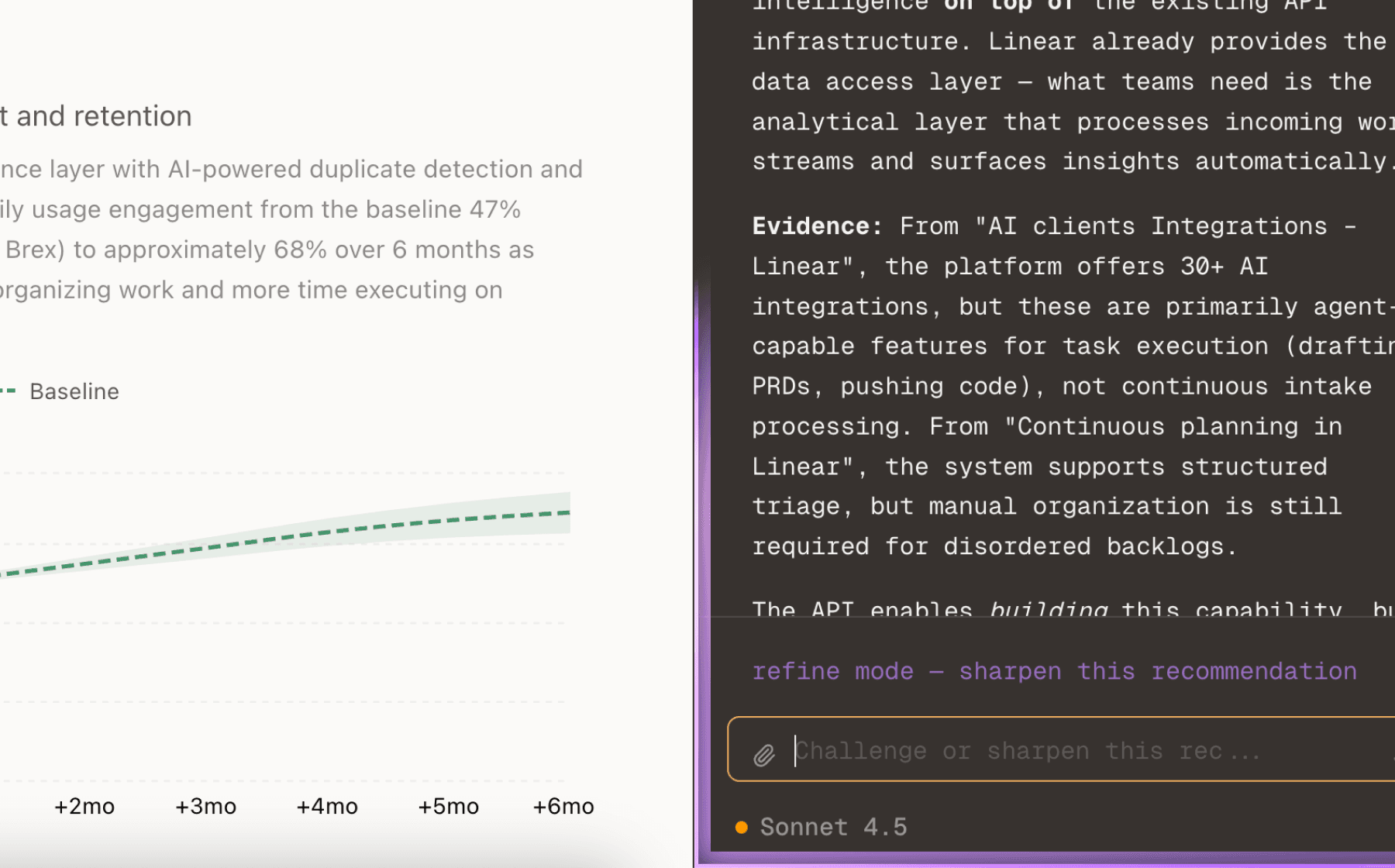
Chat with your data
Ask follow-up questions, refine recommendations, and capture business context through natural conversation.
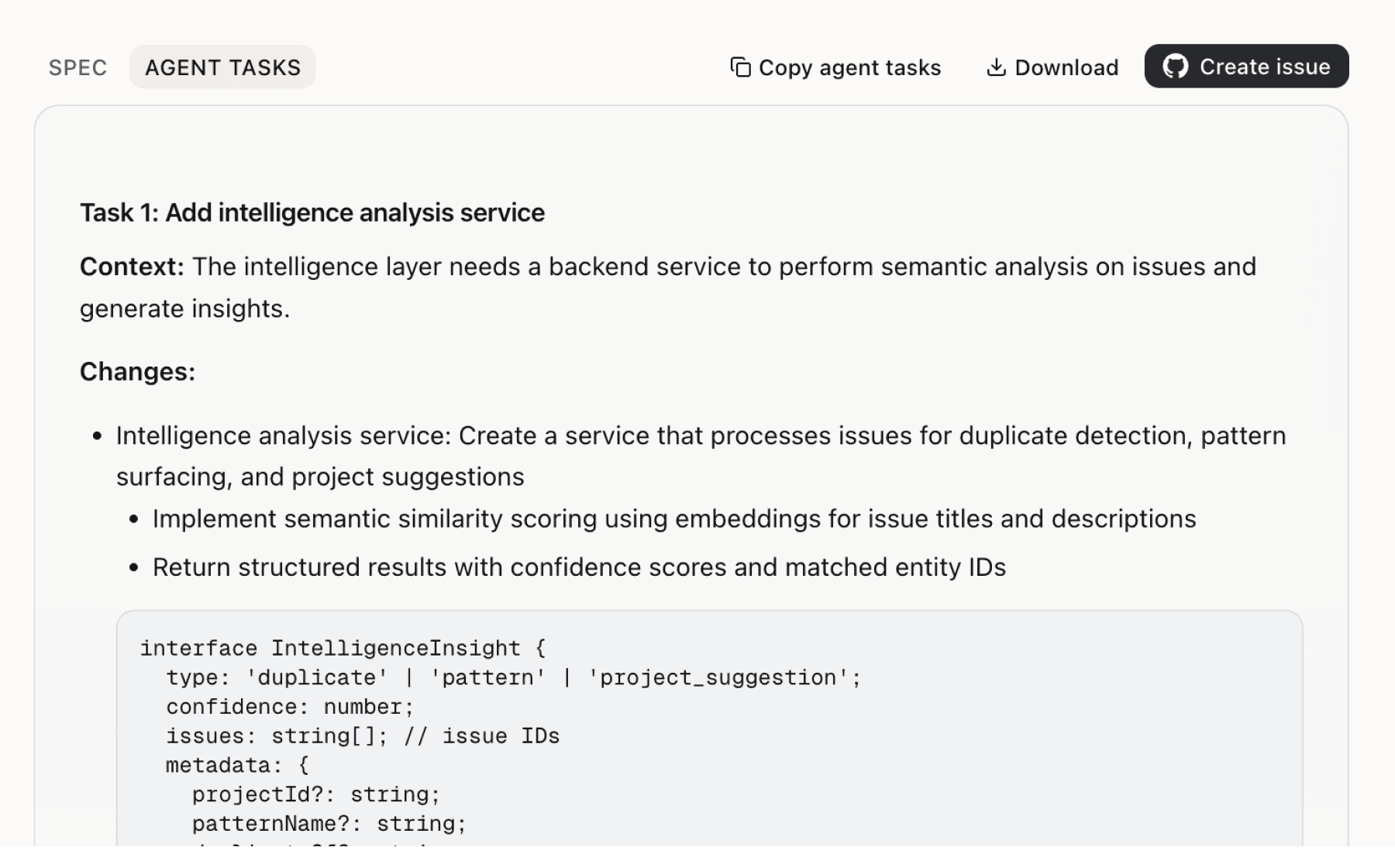
Specs your agents can ship
Go from insight to implementation spec to code-ready tasks in one click.
This analysis used public data only. Imagine what Mimir finds with your customer interviews and product analytics.
Try with your dataMore recommendations
5 additional recommendations generated from the same analysis
Platform availability is currently limited to macOS and Linux desktop environments, which excludes Windows developers and anyone who works across multiple machines or wants to evaluate the product before installing. The side-by-side diff review is a core differentiator, but it's locked behind a desktop install.
The multi-provider agent flexibility is a foundational differentiator, but most GitHub users don't know this capability exists. A GitHub Marketplace app would put Emdash in front of developers actively searching for development tools, and the marketplace listing itself serves as social proof and discovery.
The product supports 21+ CLI agents, but there's no clear way for users to understand which agent performs best for their specific use case. A tournament mode would let developers submit a task, automatically run it against 3-5 providers in parallel worktrees, and compare results with unified diffs, execution time, and token usage.
Platform availability currently excludes Windows, which represents a significant portion of the developer population, especially in enterprise environments. Many developers work on Windows machines and use WSL2 for development, but Emdash requires native macOS or Linux.
Developers trust what they can see working in public. Embeddable badges (similar to CI/CD status badges) that show Emdash agents actively working on issues would make the product visible on GitHub README files and issue threads. A badge could display agent status, completion time, or a link to view diffs.
Insights
Themes and patterns synthesized from customer feedback
Emdash is available on macOS (both Apple Silicon and Intel) and Linux via multiple installation methods (direct download, Homebrew, AppImage, Debian), covering most developer workstations. However, the absence of Windows support or web-based access may limit adoption among Windows-based developers or those who work across multiple machines.
“Available on macOS (Apple Silicon and Intel x64) and Linux (AppImage and Debian package) via direct download or Homebrew”
Emdash is Y Combinator W26 backed with an active community contribution model through Discord and GitHub PRs, providing institutional credibility and a pathway for community expansion. This positions the product well for organic GitHub adoption through word-of-mouth and community-driven provider additions.
“Y Combinator W26 backed project with active community contribution model via Discord and GitHub PR process”
SSH/SFTP support with SSH agent and OS keychain integration enables developers to run agents on remote servers while maintaining secure authentication. This feature expands use cases for developers working on remote infrastructure or distributed teams, though it's positioned as a medium-priority feature.
“Remote development via SSH/SFTP with support for SSH agent and key authentication with OS keychain storage”
Each agent runs in its own Git worktree with side-by-side diff review capabilities, providing developers confidence that agent changes are isolated and easily reviewable. This architectural approach is essential to the parallel feature development value proposition and differentiates Emdash from workflows that might risk merge conflicts or overlapping changes.
“Each agent runs in its own Git worktree to keep changes clean and isolated”
Emdash stores data locally using SQLite with explicit non-collection of code, file paths, prompts, and PII, while using only anonymous telemetry. This privacy-first approach directly addresses concerns from developer users who work on proprietary code or sensitive projects and need assurance their work stays private.
“Local-first data storage using SQLite with privacy-preserving design—code and prompts stay local unless sent to agent provider APIs”
The product integrates with GitHub at three touch points—passing issues directly to agents, opening PRs, and fetching repo information—but only requires GitHub CLI for these operations, not as a hard dependency. This creates an opportunity to strengthen GitHub-native workflows, particularly for users who prefer native GitHub operations or may not have gh CLI installed.
“Integration with Linear, GitHub Issues, and Jira for passing tickets directly to coding agents”
Emdash's ability to support 21+ CLI coding agents and easily add new providers via community contributions is a foundational strength that differentiates it from single-provider alternatives. This extensibility model directly enables the parallel feature development workflow that defines the product, making provider diversity a critical feature rather than a nice-to-have.
“Support for 21+ CLI coding agents (Claude Code, Qwen Code, Amp, Codex, GitHub Copilot, etc.) with easy provider addition via PR”
Run this analysis on your own data
Upload feedback, interviews, or metrics. Get results like these in under 60 seconds.