
What Clam users actually want
Mimir analyzed 1 public source — app reviews, Reddit threads, forum posts — and surfaced 5 patterns with 6 actionable recommendations.
This is a preview. Mimir does this with your customer interviews, support tickets, and analytics in under 60 seconds.
Top recommendation
AI-generated, ranked by impact and evidence strength
Create OpenClaw-specific onboarding templates that showcase security value in under 60 seconds
High impact · Medium effort
Rationale
The product's two strongest differentiators—speed to deployment and security—need to work together in the first user experience. Currently the messaging promises deployment in minutes and emphasizes security, but there's no evidence that users see the security value immediately upon deployment. Creating templates that visibly demonstrate the semantic firewall blocking unauthorized key access or preventing risky AI behavior would make security concrete rather than abstract.
This addresses the open question of reaching more OpenClaw users by converting more trial users to active users. If someone can deploy in 60 seconds and immediately see CLAM protecting their keys from AI exposure, they experience the core value proposition before any friction or drop-off occurs. The template-based setup infrastructure already exists, so this extends existing capability rather than building new systems.
Given the beta stage, this is an ideal time to refine the onboarding experience before scaling user acquisition. A compelling first-minute experience will improve conversion rates and generate stronger word-of-mouth in the OpenClaw community, creating organic growth momentum.
Projected impact
Implementation spec
The full product behind this analysis
Mimir doesn't just analyze — it's a complete product management workflow from feedback to shipped feature.
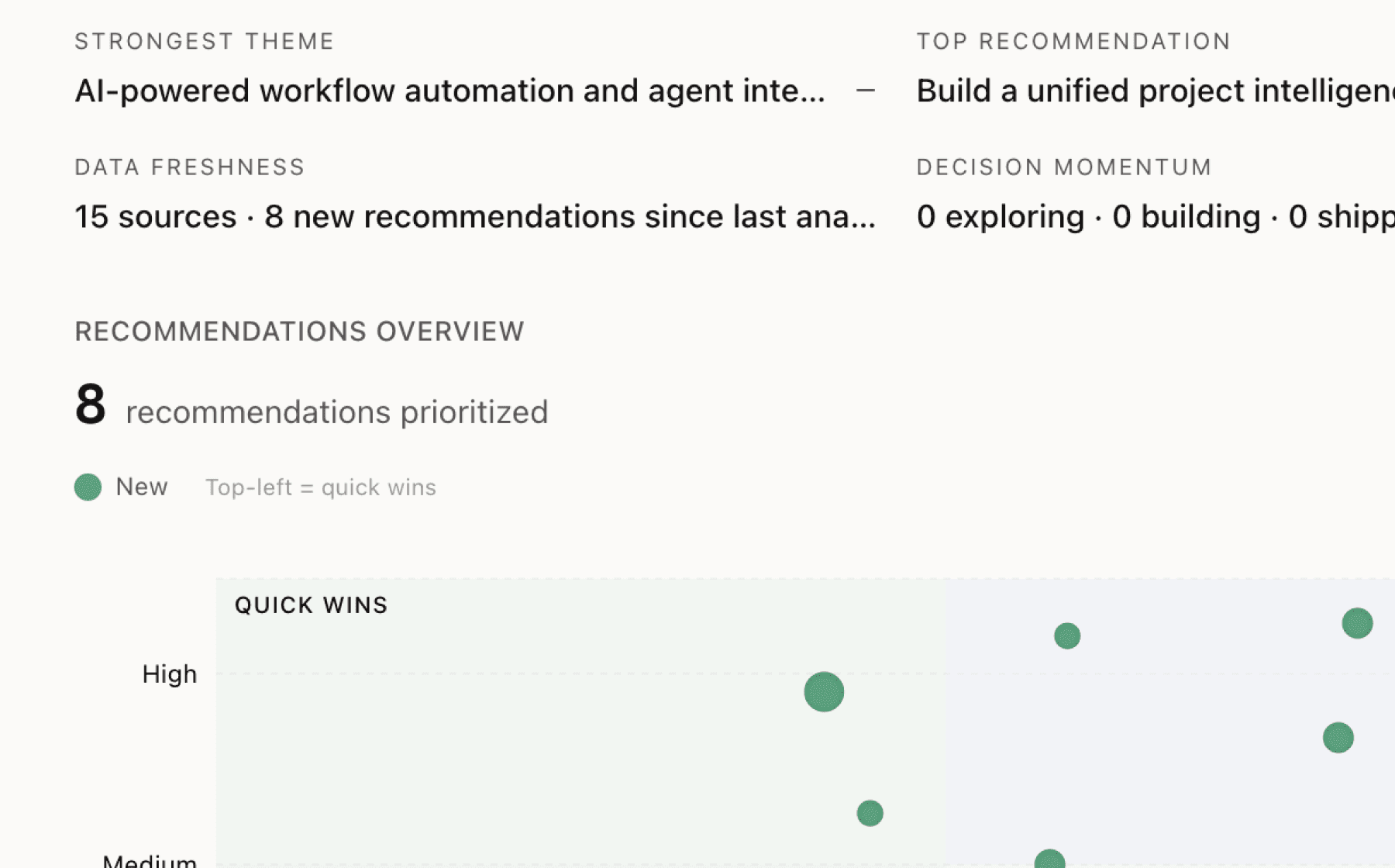
Evidence-backed insights
Every insight traces back to real customer signals. No hunches, no guesses.
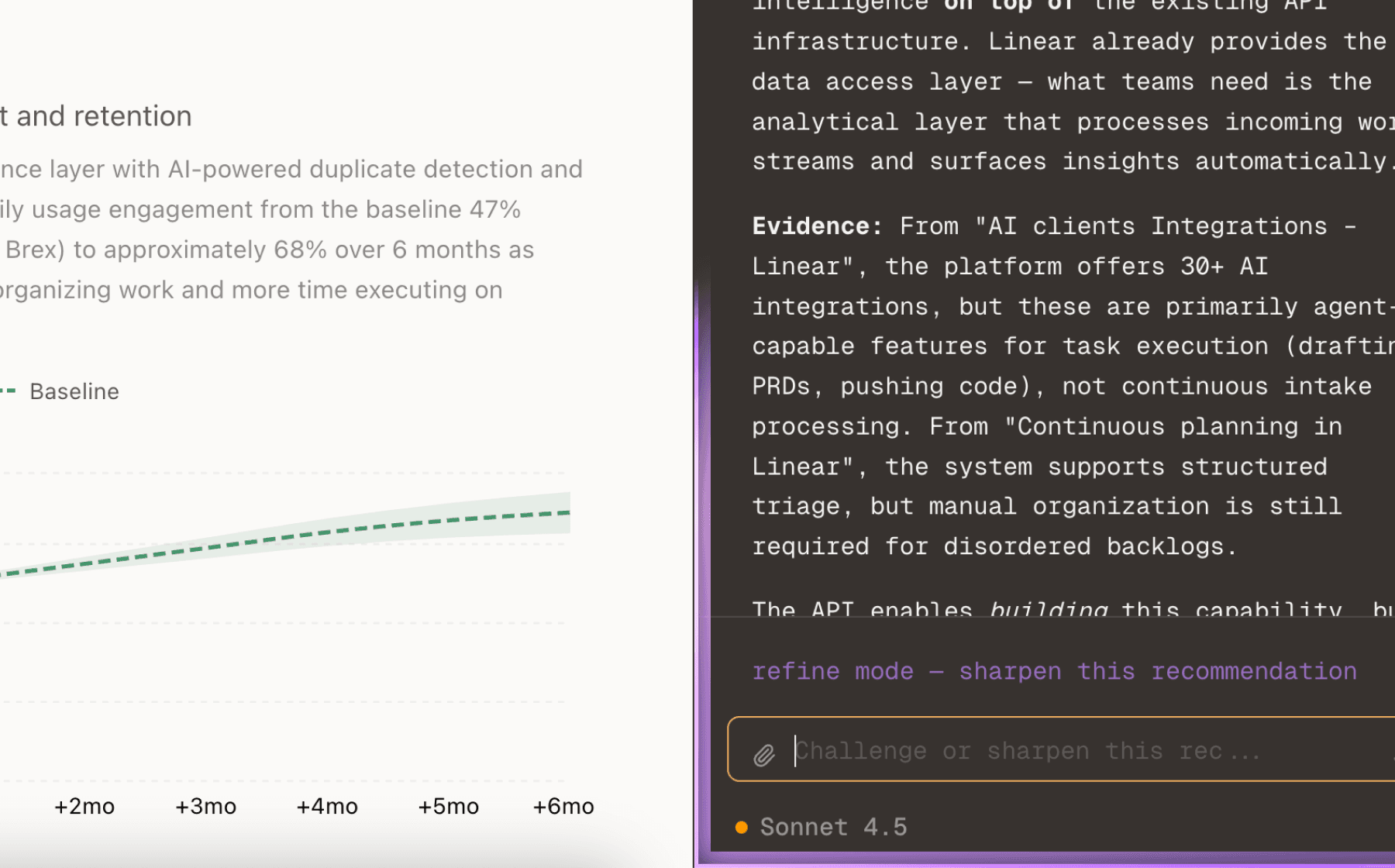
Chat with your data
Ask follow-up questions, refine recommendations, and capture business context through natural conversation.
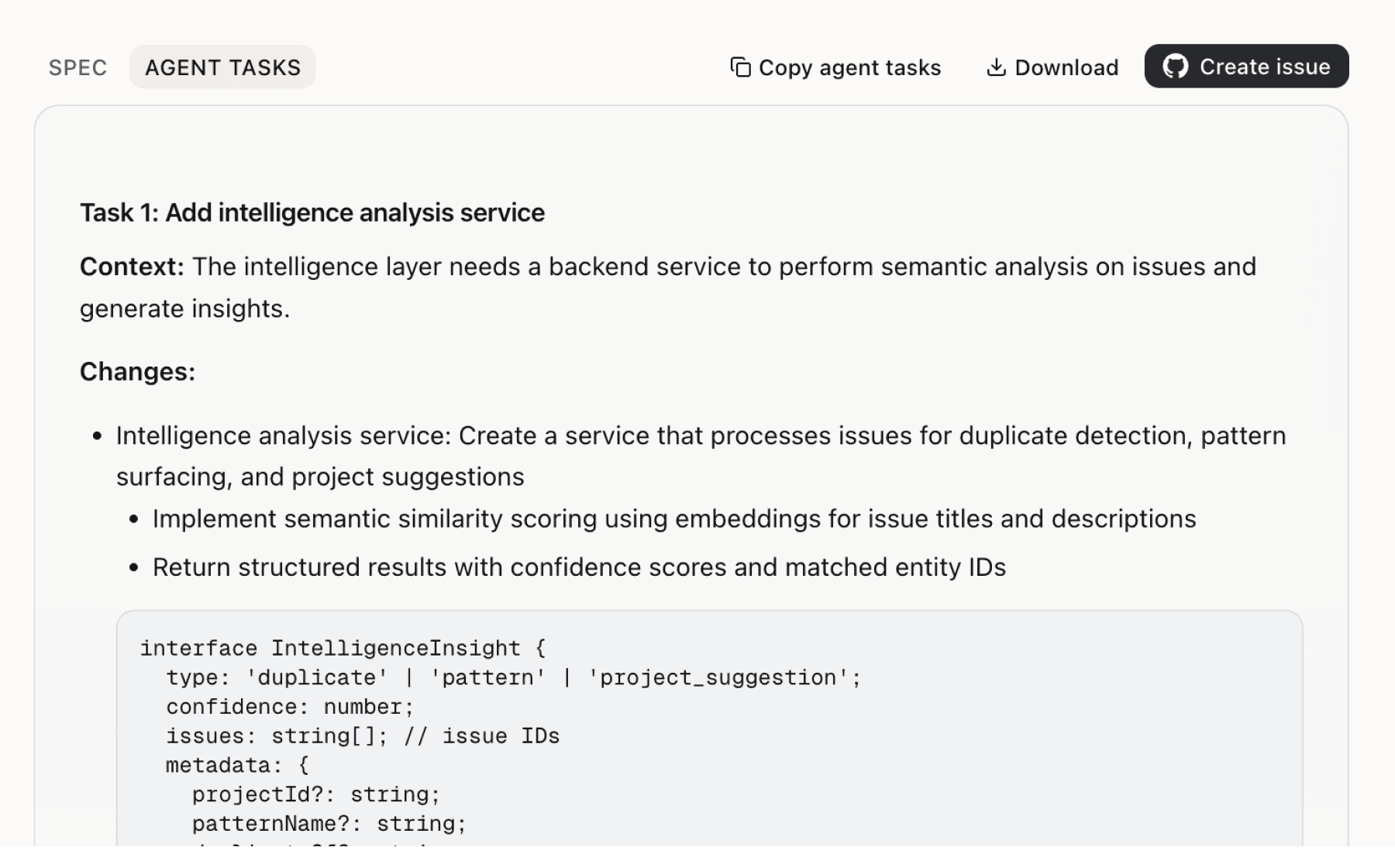
Specs your agents can ship
Go from insight to implementation spec to code-ready tasks in one click.
This analysis used public data only. Imagine what Mimir finds with your customer interviews and product analytics.
Try with your dataMore recommendations
5 additional recommendations generated from the same analysis
The primary growth challenge is reaching more OpenClaw runners, but there's no evidence of community presence or user-generated content strategy. Creating a public showcase of CLAM-secured OpenClaw deployments would serve multiple functions: social proof for prospects, case studies for sales conversations, and SEO visibility in OpenClaw search results.
The value proposition is security, but prospects may not realize they have a security problem until after deployment. A free audit tool that scans an existing OpenClaw setup and identifies where keys are exposed or vulnerable would create urgency and awareness. Users who discover vulnerabilities become qualified leads with demonstrated need.
The template-based setup is positioned as a speed advantage, but there's no indication these templates are tailored to specific OpenClaw use cases. Creating templates for common scenarios—customer support automation, data analysis agents, internal tooling—would make CLAM more discoverable through use-case-specific searches and conversations in the OpenClaw community.
The semantic firewall prevents key exposure, but there's no evidence that CLAM provides documentation or reporting on security events. Many OpenClaw users work in organizations with compliance requirements. Creating automated reports showing blocked threats, key access attempts, and security posture over time would make CLAM essential for enterprise OpenClaw users.
Many OpenClaw users are already running deployments without proper security. Creating clear migration paths from common insecure setups to CLAM-secured deployments would capture existing runners rather than only competing for new deployments. These guides would rank well for searches like 'OpenClaw security best practices' or 'how to secure OpenClaw keys.'
Insights
Themes and patterns synthesized from customer feedback
CLAM provides a free trial to lower the barrier to entry, combined with a 'BOOK A CALL' CTA for higher-touch sales engagement. This dual approach supports the stated priority of growing the OpenClaw user base.
“Free trial is available to users”
CLAM is currently in beta, indicating the product and market positioning are still evolving. This stage allows for iteration based on user feedback and market response before full launch.
“Product is in beta stage”
CLAM positions itself as 'The secure way to run OpenClaw' with a focus on secure deployment and management of AI agents. The semantic firewall feature that prevents key exposure to AI is a core technical differentiator supporting this positioning.
“The secure way to run OpenClaw”
CLAM emphasizes rapid deployment as a primary differentiator, with messaging centered on running OpenClaw securely within minutes. This aligns with the stated onboarding speed constraint and suggests speed is a key selling point to reduce friction for new users.
“Run OpenClaw Securely in Minutes”
CLAM offers template-based setup that allows users to go live quickly without complex configuration. This feature directly supports the speed-to-deployment promise and reduces barriers to adoption for new OpenClaw runners.
“Template-based setup allowing quick deployment”
Run this analysis on your own data
Upload feedback, interviews, or metrics. Get results like these in under 60 seconds.