What Argil users actually want
Mimir analyzed 15 public sources — app reviews, Reddit threads, forum posts — and surfaced 12 patterns with 6 actionable recommendations.
This is a preview. Mimir does this with your customer interviews, support tickets, and analytics in under 60 seconds.
Top recommendation
AI-generated, ranked by impact and evidence strength
Build monetization-first onboarding that shows income potential in the first session
High impact · Medium effort
Rationale
Six sources confirm that making money is the primary value proposition driving user engagement and retention. The platform already has the infrastructure (affiliate program, content scaling tools) but isn't surfacing the monetization pathway early enough in the user journey. Users sign up to generate income, not just create videos.
The current onboarding likely focuses on avatar creation and video generation mechanics, missing the critical moment to anchor users on revenue outcomes. New users should see concrete examples of how others monetize (affiliate earnings, content sales, audience building) within their first session, before they even create their first video.
This recommendation addresses the core user motivation while leveraging existing platform capabilities. By reframing onboarding around income generation rather than video creation, you align the product experience with the stated value proposition and give users a clear path from trial to paid conversion.
Projected impact
The full product behind this analysis
Mimir doesn't just analyze — it's a complete product management workflow from feedback to shipped feature.
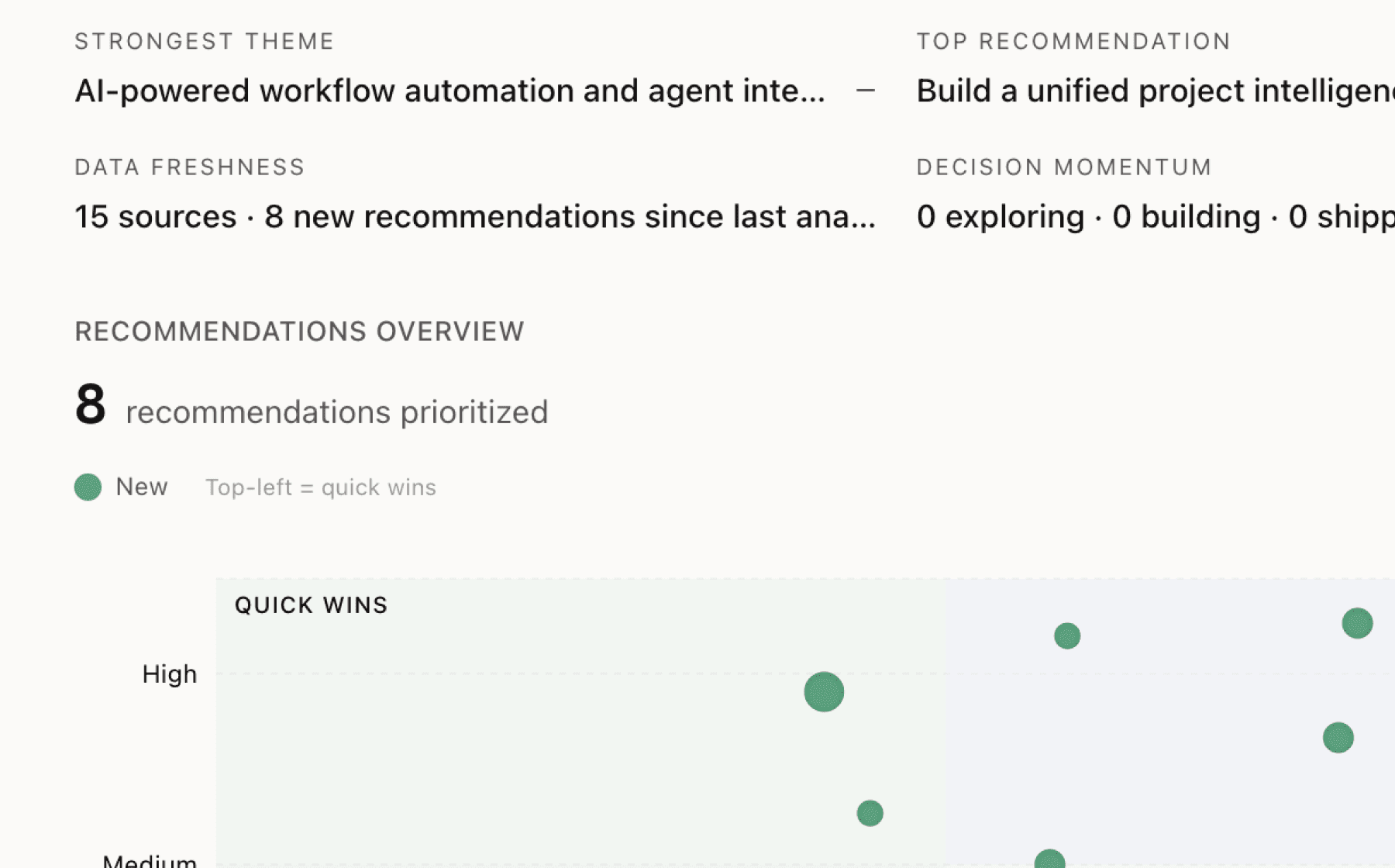
Evidence-backed insights
Every insight traces back to real customer signals. No hunches, no guesses.
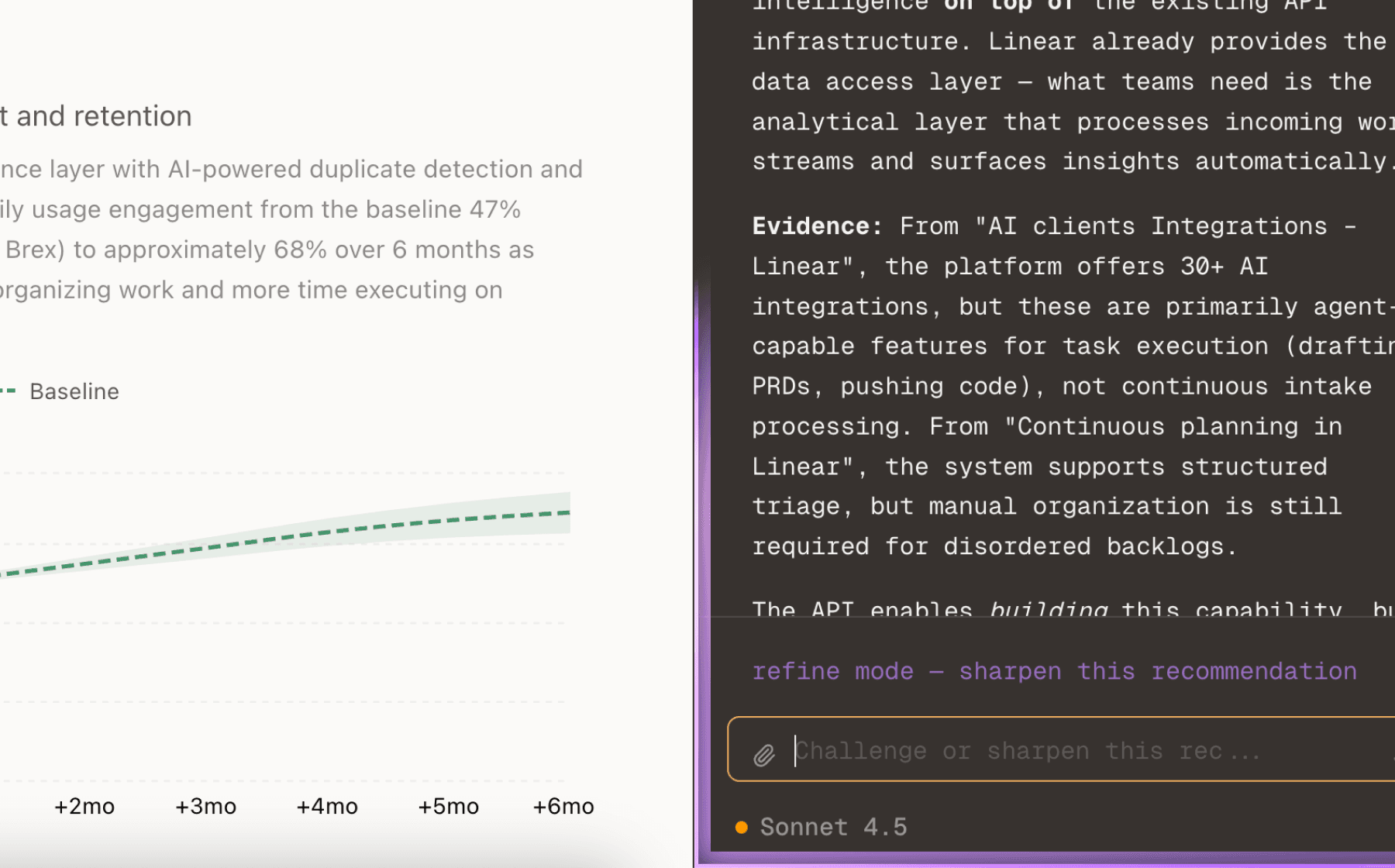
Chat with your data
Ask follow-up questions, refine recommendations, and capture business context through natural conversation.
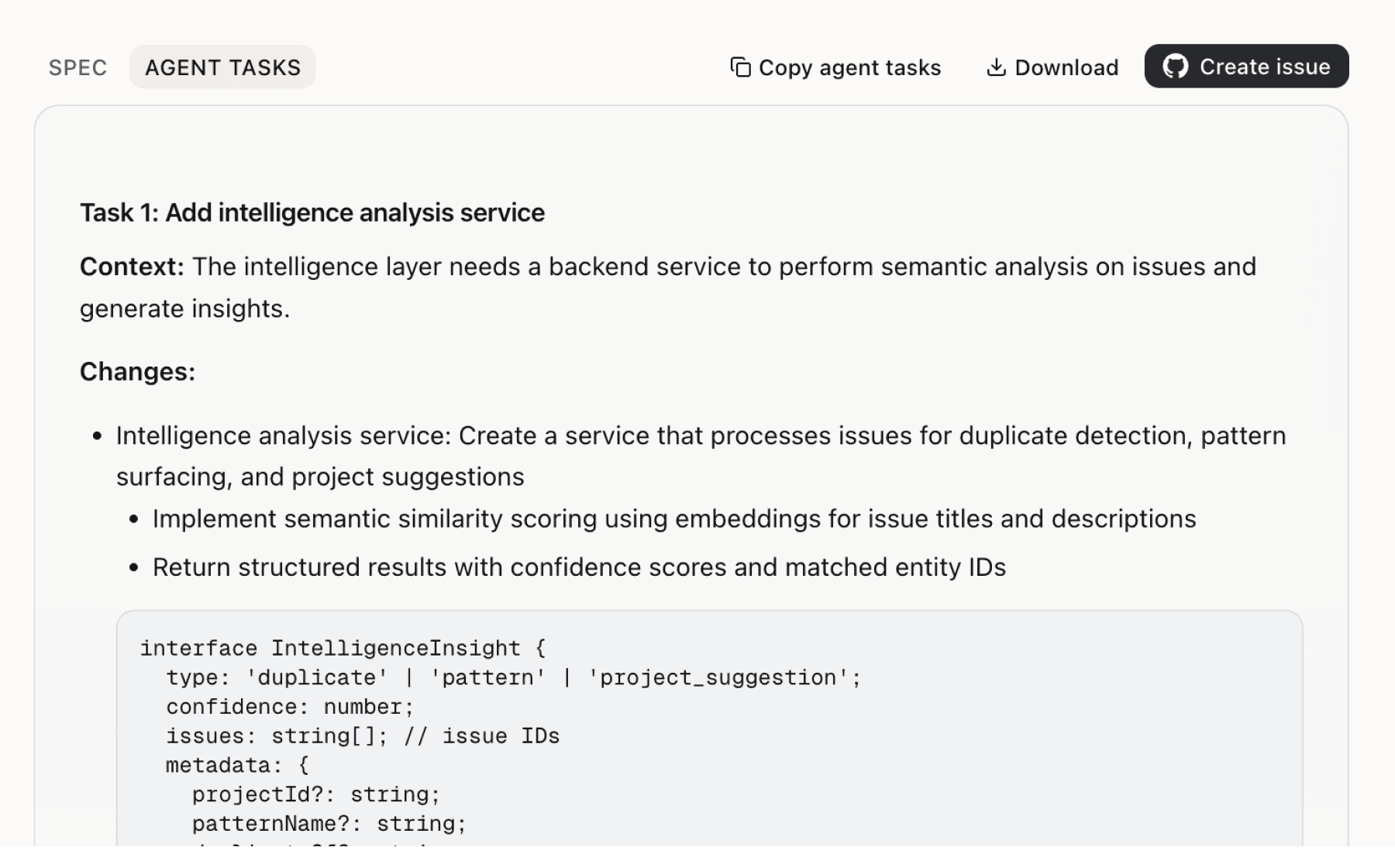
Specs your agents can ship
Go from insight to implementation spec to code-ready tasks in one click.
This analysis used public data only. Imagine what Mimir finds with your customer interviews and product analytics.
Try with your dataMore recommendations
5 additional recommendations generated from the same analysis
Three sources explicitly identify aspiring infopreneurs without camera or editing skills as a core target segment, yet the product likely treats all users the same way. This audience has distinct needs: they want to package and sell knowledge through video but lack technical production capabilities.
Two sources highlight cross-platform distribution needs (YouTube to Instagram, Instagram Reels) while five sources emphasize content scaling as a retention driver. Creators are managing presence across multiple platforms but likely doing manual reformatting for each destination. This creates friction that undermines the effortless creation promise.
Five sources reference the affiliate program as a monetization pathway but it's likely buried in settings or documentation. The most engaged users (those creating avatars and generating content) are ideal affiliate candidates but probably aren't discovering the program organically.
Two sources confirm API availability for programmatic video generation, indicating enterprise demand exists. This represents a distinct business model from individual creators: enterprises need batch processing, white-label capabilities, and integration with existing content management systems.
Three sources highlight the minimal setup requirement (one photo, one minute of voice) as a key differentiator, but even this may be too much friction for trial users evaluating multiple tools. The consent verification process adds necessary security but likely creates abandonment.
Insights
Themes and patterns synthesized from customer feedback
Multiple sources cite free trial access (5 days), discounted annual pricing (30% off), and low-friction sign-up as acquisition mechanisms. This reflects a deliberate strategy to reduce barriers to trying the product and converting new users.
“Platform offers 5-day free trial and 30% discount for yearly commits to reduce user onboarding friction”
Sources explicitly call out aspiring infopreneurs and users without camera or editing skills as target segments. This indicates the platform is addressing a broader audience beyond traditional video creators—those seeking to monetize knowledge or expertise through video without technical barriers.
“Target audience includes aspiring infopreneurs looking to monetize content through video without requiring specialized technical skills”
The platform offers API access for programmatic video generation, indicating expansion beyond individual creators into enterprise use cases that require batch or integrated video generation. This represents a secondary but growing revenue stream.
“API available for creating videos at scale, enabling programmatic video generation for enterprises”
The platform supports distribution workflows across multiple platforms (YouTube to Instagram, Instagram Reels), indicating that creators need integrated tooling to manage content across multiple channels. This addresses the operational complexity of modern content distribution.
“Product supports cross-platform video posting workflow (YouTube to Instagram)”
An affiliate program is mentioned consistently across sources as a monetization and growth mechanism. This suggests the platform is actively building a multi-sided model where existing users become referral partners, potentially driving engagement and retention metrics.
“Argil offers an affiliate program as a monetization pathway for users”
Sources highlight that creators need the ability to scale content production and automate short-form video creation. This addresses a secondary but significant user need for efficiency when producing multiple video variants across platforms.
“Platform enables users to 'Start making money' and scale content, suggesting monetization and content scaling are key value propositions”
The platform targets three distinct user segments—Promotion (UGC ads), Education (masterclasses), and Entertainment (YouTube channels)—indicating differentiated value propositions across the creator economy. This multi-use case approach broadens addressable market.
“Platform targets three primary use cases: Promotion (UGC ads), Education (masterclasses/training), and Entertainment (YouTube channel creation)”
The platform explicitly positions user ownership of generated video content as a differentiator. This clarity on intellectual property rights addresses potential user concern about AI-generated content and builds trust in monetization pathways.
“You own the rights, you can use it as you wish - Users retain full ownership of generated video content”
Sources consistently emphasize that enabling creators to 'make money' and generate income through video content is a central value proposition. Affiliate programs and revenue-sharing models are positioned as key pathways for user engagement and retention.
“Enable creators to make money through video content generation without traditional camera-based production”
Across all sources, Argil consistently positions itself as enabling creators to produce professional video content without traditional production barriers (camera equipment, editing skills, on-camera presence). The word 'effortlessly' appears as a defining differentiator, targeting users who lack technical skills or camera confidence.
“Users can generate videos by typing text or recording voice without needing camera equipment or traditional video production”
Multiple sources identify video as 'the most engaging format' for content in the creator economy, establishing video generation as addressing a fundamental user need. This positioning justifies the platform's focus and differentiates it from other content creation tools.
“Video is identified as the most engaging format for content creation in the creator economy”
The platform enables rapid personalization through AI avatar creation requiring only one photo and one minute of voice recording. This low-friction onboarding directly addresses user friction in video production and reduces barriers to content creation.
“AI avatar cloning requires minimal setup: one photo and 1 minute of voice recording to generate personalized video variants”
Run this analysis on your own data
Upload feedback, interviews, or metrics. Get results like these in under 60 seconds.